October is the last clear expression of dry-season Amboseli before the short rains shift the character of the park. It still delivers the fundamental qualities that make the dry season such a productive safari period: open visibility, reliable elephant concentration around permanent water, and consistently workable mornings for Kilimanjaro views. What it lacks is the crispness and absolute certainty that characterise July and August at the height of the dry season. That is a relatively minor distinction, and for visitors who understand it going in, October remains a genuinely strong month.
This is not a compromise choice. For many travellers, the late-season feel of October actually suits them better than the most promoted peak months. The park still performs well. The atmosphere is a little different. And the transition toward the short rains adds a sense of seasonal change that gives October its own texture.
What October Conditions Feel Like on the Ground
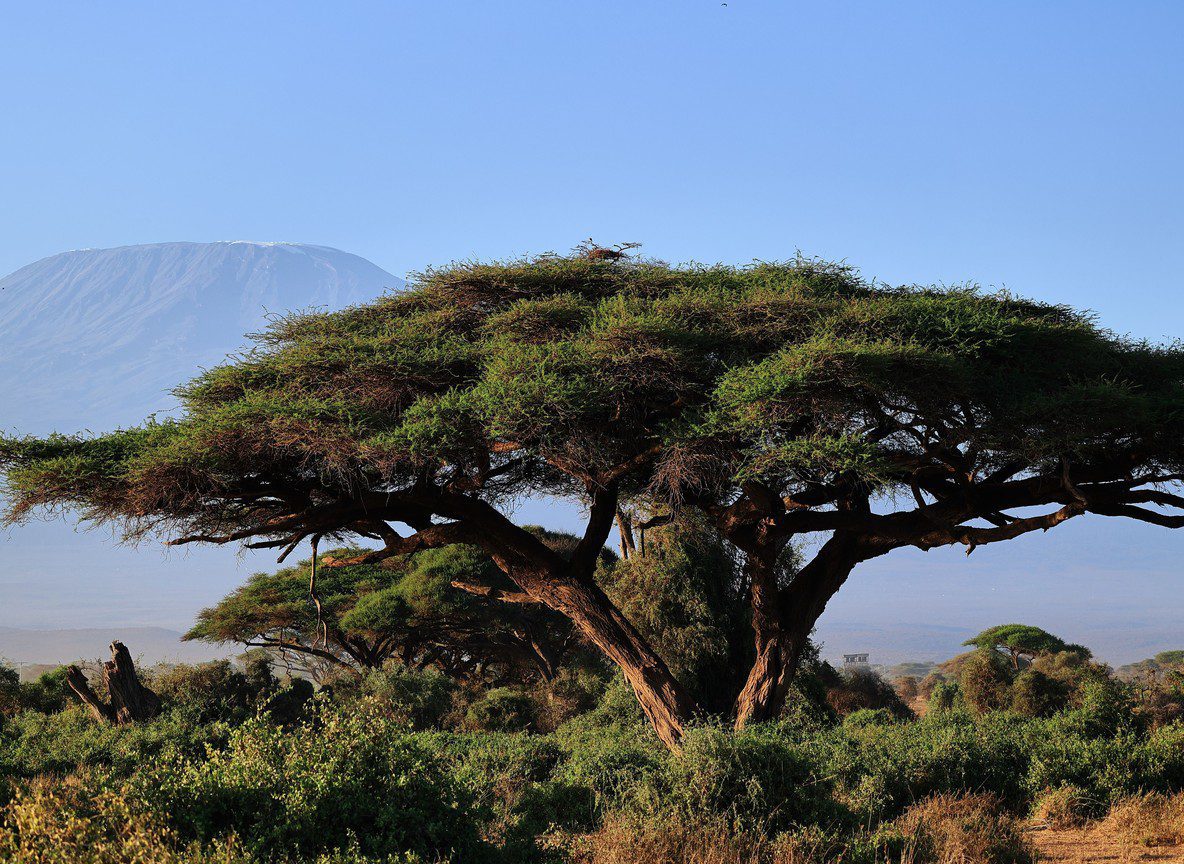
October mornings still carry the dry-season quality that defines Amboseli‘s best period. Cool starts, clean skies, and the prospect of a productive mountain view remain realistic parts of the day. The landscape is at its most dusty and open, having had months to dry down after the long rains, which means visibility across the plains is excellent and animal spotting is as easy as it gets during the year.
By October, Kilimanjaro can sometimes pick up a haze or heat shimmer effect that makes the summit appear slightly less sharp than in the cool, crystal-clear mornings of July. This is a subtle effect rather than a dramatic one, and on many October mornings the mountain still stands out well at dawn. It is simply not as consistently clean as August, and this is worth knowing before building a trip specifically around photography of the summit.
The sense of an approaching seasonal shift is present in October without being urgent. Some afternoons carry more cloud build-up than would be typical in mid-dry season, and the atmosphere has a slightly softer quality than the hardest months. These are background details rather than central features, but they give October a transitional character that some visitors find appealing and others find slightly unsettling if they were expecting peak July conditions.
Wildlife in October
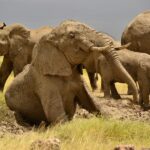
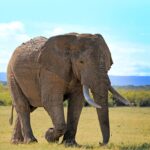
This is where October performs as strongly as any dry-season month. The elephant concentration around the Enkongo Narok and Ol Tukai swamp areas has been building for months, and by October the herds are as predictable and accessible as at any point in the year. Large family groups, multi-generational dynamics, and the close-range encounters that make Amboseli famous are all reliably available in October.
The broader wildlife picture is strong. By the end of the dry season, the park’s mammal community has compressed around water in ways that make a single game drive highly productive. Wildebeest, zebra, and buffalo herds are present in significant numbers. Giraffe are frequently visible in the acacia areas. Lion activity, while less prominent than in some other reserves, is present and occasionally rewarded.
One specific October characteristic is the density of wildlife around the swamp margins during the morning hours. With the plains at their driest, the swamp system is the most concentrated source of water in the ecosystem, and the morning gathering of species around its edges creates a layered, dynamic scene that is particularly strong for photography. Elephants wade, waders probe the shallows, and other mammals drink from accessible points along the marsh edge. Early in the morning, this scene has a quality that justifies October as a strong photographic month.
Kilimanjaro Views in October
October remains in the good-to-strong category for mountain views, though it is honest to note that September is generally a cleaner month for this specific experience and November is weaker. Within that positioning, October gives you a high proportion of clear or partially clear dawn mornings, with the summit visible in a meaningful way for the first one to two hours after sunrise.
The afternoon picture is less reliable. Heat haze and cloud build-up are more common in October afternoons than at the peak of the dry season, and positioning sunset drives around mountain photography expectations is less likely to pay off than the equivalent drive in July. Dawn remains the unambiguous priority for mountain-focused visitors.
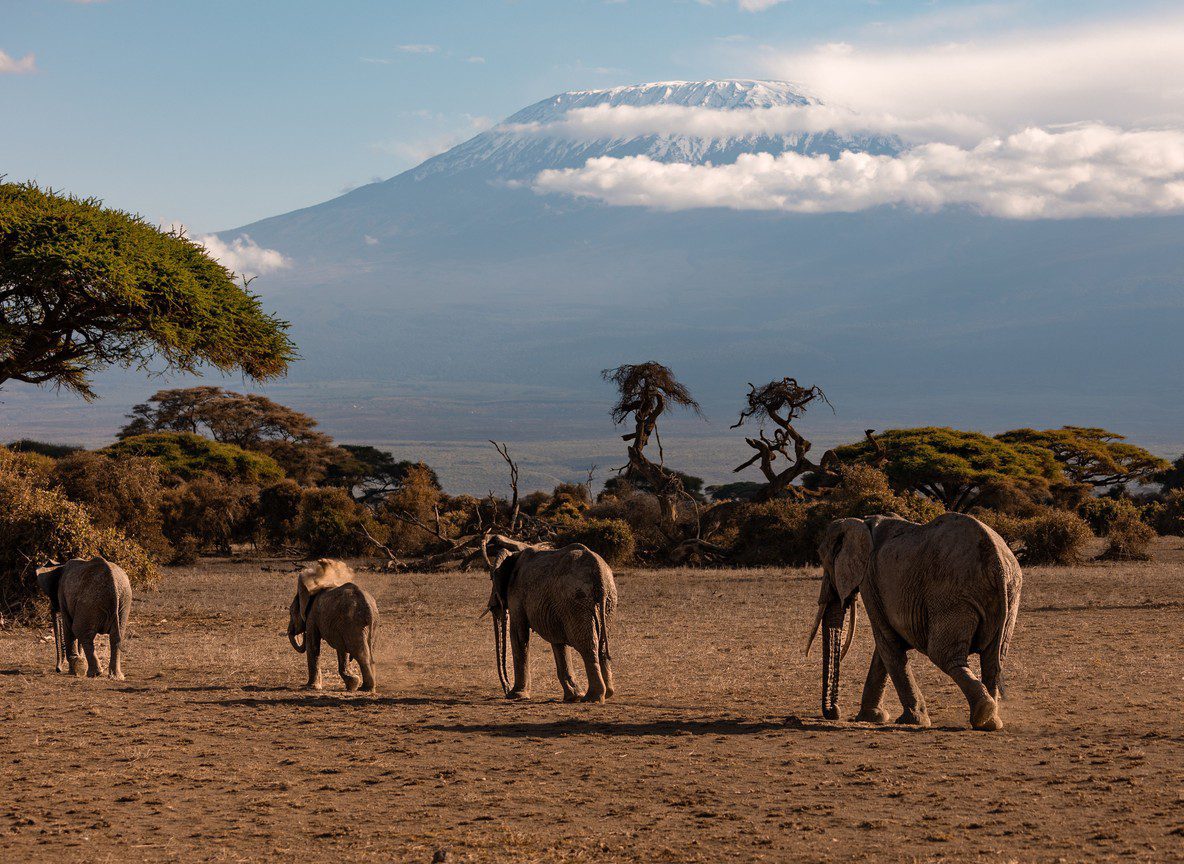
For photographers specifically planning around the Kilimanjaro-and-elephant combination: October is still a practical month for this, but build a three-night minimum stay into the plan to give yourself multiple dawn attempts. The success rate on any single morning is lower than in July or August, and having three mornings rather than two meaningfully improves your odds of the conditions working when you need them.
Road Conditions and Daily Planning
October generally keeps enough dry-season structure to make safari logistics straightforward. Roads and tracks inside the park are typically firm and accessible, vehicle movement between zones is predictable, and the daily pattern of early departure, mid-morning swamp work, and afternoon rest followed by a late drive functions cleanly.
There can be some variability in October. Late-afternoon weather systems occasionally affect visibility or require early returns from afternoon drives. This is the exception rather than the rule, but it is different from July when afternoon disruptions are genuinely rare.
Planning a typical October day in Amboseli:
- Leave camp before sunrise for mountain and elephant viewing at the swamp margins
- Stay with the swamp areas through the productive mid-morning period
- Return to camp for lunch and rest during the stronger light of mid-day
- Head out again around 4:00 PM for the soft-light afternoon drive, focusing on open-plains movement
That structure works well in October and rarely needs significant adjustment because of conditions.
How October Compares to Neighbouring Months
September versus October: September is the more refined dry-season experience. It carries the full calm and clarity of mid-dry season without the transitional feel that begins to emerge in October. For maximum dry-season quality, September is the stronger choice. October is the practical choice when September dates are not available.
October versus November: October is the clearly better choice for dry-season safari qualities. November’s short rains bring meaningfully more weather variability, reduced mountain reliability, and a shift in the overall safari character. Visitors choosing between these two months for a classic dry-season Amboseli experience should prioritise October.
Who October Suits
October is an excellent month for travellers who want strong dry-season conditions without the peak-month pricing and visitor numbers of July and August. Repeat safari visitors who know the difference between peak and late dry season, and who value a slightly quieter park over marginally sharper conditions, often rate October highly. Couples and families building multi-destination Kenya itineraries will find that October Amboseli combines well with October timing in other parks, where conditions are also strong.
Photographers with some flexibility between September and October face a genuine trade-off. September gives cleaner mountain conditions. October gives slightly lower visitor numbers and a warmer, more textured late-season atmosphere. Both can produce excellent work. The decision comes down to whether you prioritise mountain sharpness or a quieter field experience.
First-time visitors are well served by October. The park still operates in full dry-season mode, sightings are reliable, and the experience matches the mental image most visitors carry before arriving. The honest note for first-timers is that if July or August dates are available, those months are fractionally stronger. If October is what the schedule allows, it is a very good answer.
Practical Planning Notes
Access to Amboseli in October is straightforward. The road from Nairobi via Namanga is in good condition, charter flights to the airstrip are reliable, and inside-the-park accommodation gives the cleanest game-drive rhythm for early departures.
Packing for October should account for both the dry-season conditions and the possibility of a transitional afternoon. A light jacket for cool dawn drives, breathable clothing for warm afternoons, solid sun protection for open vehicles, and a thin waterproof layer in case of an October afternoon surprise cover most of the practical range.
Duration: two nights work for a focused elephant safari in October. Three nights are more useful if Kilimanjaro photography is central to the plan, since the additional dawn attempts improve the odds of catching the summit in ideal conditions.
Pros and Cons at a Glance
| Factor | Notes |
|---|---|
| Elephant viewing | Excellent; strong swamp concentration |
| Kilimanjaro visibility | Good at dawn; slightly less consistent than September |
| Landscape | Fully dry and open; excellent for visibility |
| Birding | Solid; swamp areas active |
| Road conditions | Good; standard dry-season access |
| Visitor numbers | Lower than July or August |
| Pricing | Below peak; reasonable value |
| First-time suitability | Strong, with honest notes on peak comparison |
Where to Go Next
For visitors building a broader Kenya itinerary around October, the month pairs naturally with the Masai Mara, where late dry-season conditions are also strong, and with Samburu, where the distinct northern Kenya wildlife experience is fully accessible in October. Combining two or three destinations in this period creates a coherent circuit across different ecosystem types.
Broader Amboseli planning context, including month-by-month seasonal guides, is available at touringinsights.com. For current field conditions, camp availability, and specific October road status, trunktrailssafaris.com maintains on-the-ground knowledge that generic seasonal guides cannot replicate.
Turn this reading into a real itinerary with help from a Kenya-based safari team.
Start Planning Your Safari